aliases:
- "A Complete Guide to Backpacking Peru" title: "A Complete Guide to Backpacking Peru" author: "BucketListly Blog" url: "https://www.bucketlistly.blog/posts/peru-one-month-itinerary-backpacking" related to: rw-category: "articles"
- "" tags:
- artifact/readwise/articles📰 processed: false
A Complete Guide to Backpacking Peru
Full Document
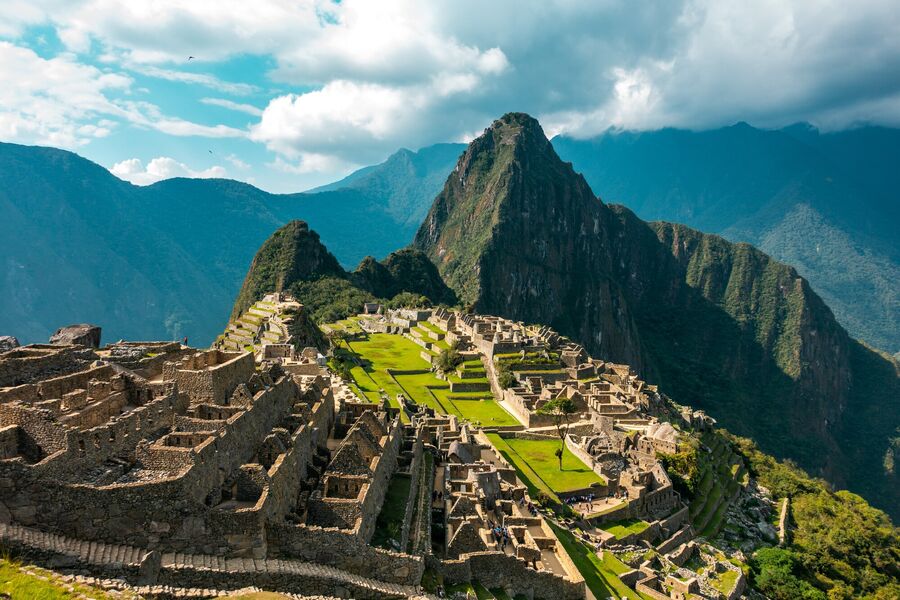 As a travel destination, Peru is a no-brainer. The southern part of Peru, where Machu Picchu is, is most popular among tourists as they often skip the north and go straight down to either Lima or Cusco. I would have done the same If I did not know anything about the north but as I traveled through from north to south, I had the opportunity to explore both parts and I can confidently say that the north of Peru is where the real Peru is.
In this guide, we will NOT just focus on going to Machu Picchu, but we will include places like Ica, Nazca, Huanchaco, and best of all, Huaraz, the part of the Andes mountain range that is only second to the Himalayas!
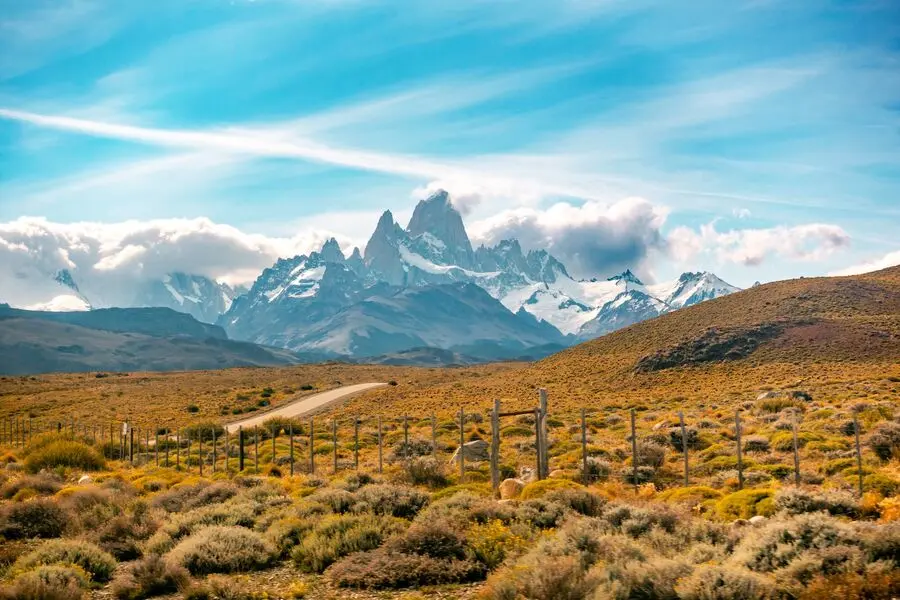 6 Months Itinerary for South America
Don't have time to read? Save this page on Pinterest for later and don't forget to follow us on Pinterest.
Itinerary Map
Peru Travel Video
One Month Itinerary
Huanchaco (2 nights)
Huanchaco is a great first stop if you are traveling from Ecuador. From Vilcabamba, Ecuador, you can take a bus to Loja and from there you can either get a bus directly to Piura, Peru or if in my case that the 1PM direct bus was cancelled, you can do it manually by getting a bus to the border town of Macara, Ecuador where you can cross the border and get a collectivo that is waiting for people at the border to Sullana, and then go to the bus terminal and get a bus to Piura (runs very often). From Piura, you can get an overnight bus by Linea to Trujillo. Once you arrived in Trujillo, you can get on a local bus with the sign "Huanchaco" to go there.
On your arrival day, take it easy and walk around the beach of Huanchaco. Take in the culture or go surf into the sunset. In the evening, go find a nice restaurant with a view over the ocean and order Ceviche, a seafood dish popular in Peru, and enjoy the sunset the Peruvian way.
On your second day, go on a bus to Trujillo and get a collectivo to the Moon temple (Huaca de La Luna). In the Moon temple, you will learn about the pre-colombian people that live in this area called the Moche and be fascinated by what they had accomplished during their reign, especially the city wall shown above. Be sure to also visit the museum near the Moon temple to learn more about the Moche people.
Once you have laid the groundwork of your Moche knowledge, head back to Huanchaco and on your way back, ask the bus driver to drop you off at the Chan Chan entrance and explore the ruins to learn more about the Moche.
The next day, you can head off to your next destination, Huaraz.
More Activities in Huanchaco
Where to Stay in Huanchaco
Getting From Huanchaco to Huaraz
After Huanchaco, we will go to the hiking capital of Peru, Huaraz. To get from Huanchaco to Huaraz, you will have to first have to prebook your overnight bus via Linea (which I recommend) or Movil Bus Companies. Once you have the ticket, you will then have to go to one of these specific bus terminals in Trujillo.
To get to Trujillo, you just have to take the same bus you took to get to Huanchaco when you arrive at drop off at Linea Bus Terminal again. There is one Linea bus leaving at 9:30 PM and you should arrive in Huaraz by 6 AM. The bus ticket should cost about 50 SOL. You can browse through the bus option online with a link below:
Huaraz (9 - 12 nights)
Huaraz is my favorite place in South America, hands down. The best part of the Andes are located here and if you are into hiking like me, you will find plenty of things to do here.
 A Complete Backpacking Guide To Huaraz
On your first full day, go into the city center and get yourself acquainted to the city and the altitude. The city is located 3000m above sea level so you will need these first few days to rest before doing anything physical.
On your second day, do some research on the hikes you can do there by asking the hostel you are staying or going to places like the California cafe to have their finest coffees, talk to people and find partners to do rock climbing or trekking with. Right before you head back, book a transfer to the trail head of the famous Lake 69 the next day.
On your third day, do the Lake 69 and see if your body is equipped to the altitude or not. The hike is about 6 - 8 hours long and the trail consisted of flat landscape at first and become quite steep at the first lake, where and flat again for an hour or so before going straight up all the way to Lake 69.
Keep in mind that, with the altitude of 4000+ m, hiking can be quite challenging. Walk slow and breath enough to ensure you don't get altitude sickness when hiking in Huaraz.
That said, Laguna 69 is definitely worth the sweat. Its vivid blue lake and snowy mountains are quite a sight to behold.
On your fourth day or fifth day, you can either rest a bit or go on another tour that goes up to the Pastoruri Glacier. This tour doesn't require you to be super active but it does go up to 5000+ m elevation and you have to walk one hour to see the glacier in that altitude. The trail is not much of a climb but the altitude can really take its toll.
The scale of the glacier will blow your mind away.
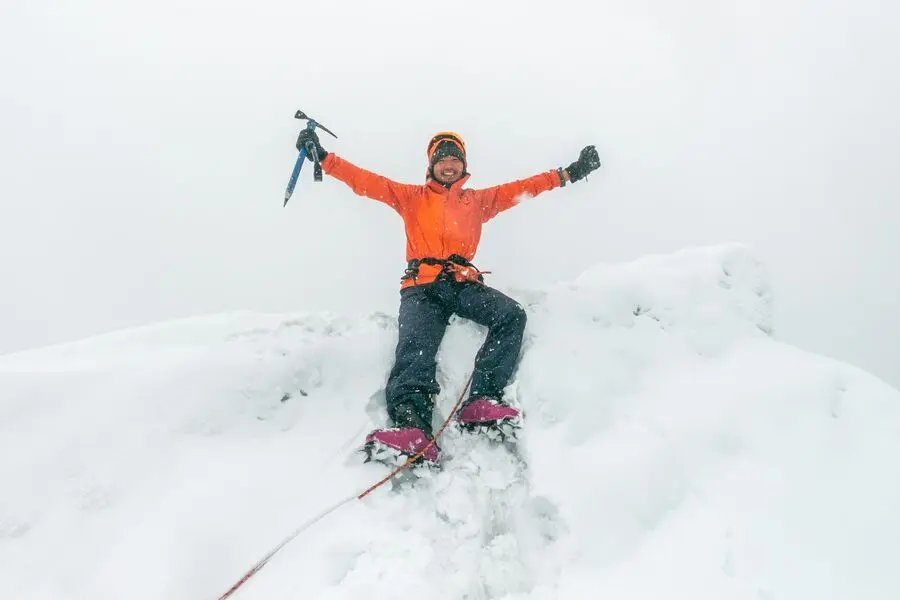
If you don't have experience on alpine mountaineering and are looking to learn at some point, Huaraz is the best place to do that. It is relatively cheap to go on small ice climbing trip and with the altitude only second to the Himalayas, Huaraz offers the best experience with stunning view all for an affordable price. This is your chance!
I decided to do just that and summited Nevado Mateo, a 5150m ice peak that required me to ascend the steep face with ropes and anchors to the top. Given that it was snowing heavily that day and we didn't get to see anything, it was one of the best experience I had in Peru, learning the basics and pushing my body through to the top.
The next day, get some rest and start planning on the next big trek, the Santa Cruz. Go into the city and rent a tent, sleeping bags, sleeping mat, food, stove, gas, etc. for your 4 days sabbatical into the Andes. Santa Cruz is a 4 days trek that will take you from 3000m to 4750m through Punta Union pass and back down again, while hauling your 15kg backpack all the time.
Either that or you can do it with a tour which will take the load off you as the mules will carry all the equipments for you and the guide will cook for you.
The trail is stunning through and through and by keeping this trek at the end, it makes it the perfect closure for your trip in Huaraz.
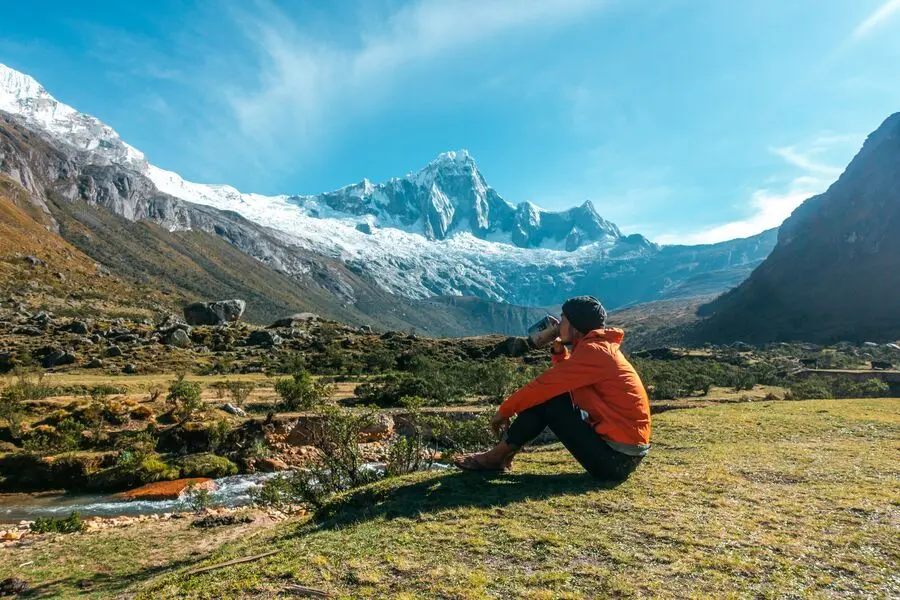 How To Hike The Santa Cruz Trail, Huaraz Independently
More Activities in Huaraz
Where to Stay in Huaraz
Getting From Huaraz to Lima
From Huaraz, you can get a bus from Huaraz Cruz del Sur terminal to Lima via Cruz del Sur. There are 6 buses per day from Huaraz to Lima from 11 AM to 11 PM. The journey will take about 7 hours and cost around 30 SOL per person. Check the link below to book the ticket online:
Lima (2 nights)
If you seek a nice place to rest from a very demanding trip in Huaraz, Miraflores in Lima offers you any convenience you would ever need. In between that, you can go to the main square and check out the Cathedral de Lima and the Basílica y Convento de San Francisco de Lima.
Did you know that there is a pyramid in Lima? During the day, drop by the Huaca Pucllana, a small pyramid located in the middle of the city. The tour itself is not that impressive but this unique-looking pyramid is quite interesting in itself.
In the evening, enjoy the sunset at the Parque del Amor near the coast west of Miraflores.
More Activities in Lima
Where to Stay in Lima
Getting From Lima to Ica
From Lima, you can take one of the many daily buses operated by Cruz del Sur or Oltursa at their designated bus terminal. I went with Cruz del Sur and the bus left from Cruz del Sur terminal and dropped me off at Cruz del Sur terminal in Ica. The journey should take about 5 hours and cost around 15 USD per person. You can book the ticket online with the link below:
Ica (2 nights)
The city of Ica itself is not the main highlight of visiting Ica. The main highlight is Huacachina, a oasis-like town located on a few kilometers away from the city center. You can paddle the boat, get on a bungee car and ride around the sand dunes or climb up one of the sand dunes and watch the sunset like I did.
More Activities in Ica
Where to Stay in Ica
Getting From Ica to Nazca
From Ica, you can make your way early in the morning to get a bus to Nazca and from there, take a taxi to the Nazca Airport to get a tour to check out Nazca Line from the air.
There are several buses from Ica to Nazca just like from Lima to Ica so you can choose whichever one with the schedule that works best for your itinerary. The journey should take about 2.5 hours and cost around 13 USD. Be sure to check the link below for the ticket:
Nazca (0 night)
Nazca and Nazca lines can be see in half day so there is no need to stay in Nazca. From Ica, you can make your way early in the morning to get a bus to Nazca and from there, take a taxi to the airport. At the airport, you can buy the tour to fly above Nazca and see the lines from above. The flight takes only around 20 minutes and the tour itself was nothing spectacular but some of the nicer Nazca lines are only accessible by air so it is a must if you want to see more.
More Activities in Nazca
Getting From Nazca to Cusco
To get from Nazca to Cusco, you will have to take an overnight bus via Cruz del Sur. They have around 3 overnight buses leaving between 7:20 PM to 11:50 PM and it leaves from Cruz del Sur bus terminal in Nazca.
Be prepared as the journey will take about 15 hours, one of the longest bus rides you will take in South America. Thankfully, the Cruz del Sur buses are quite comfortable so it should not be too bad. The bus ticket costs about 150 SOL per person and they will drop you off at Cruz del Sur terminal in Cusco. Be sure to check the link below to book your bus ticket:
Cusco (3 nights)
Cusco is one stunning city and a hell of a ride to get to and from. It will take you over 15 hours before you arrive in Cusco so the first day, go slow and explore the main square (Plaza De Armas) and walk around the criss-crossing streets up the San Cristobal church on the hill to see the city from above. You can also go a little further to Saqsaywaman ruin but personally, I think it was not worth it since it was very expensive to get in and you will be seeing Machu Picchu soon anyway. On your first day, take your time to look around the tour agencies and find ways to get to Machu Picchu the next day.
For the train, be sure to book it 2 days prior to the day you want to go as it is usually all booked out 2 days in advanced.
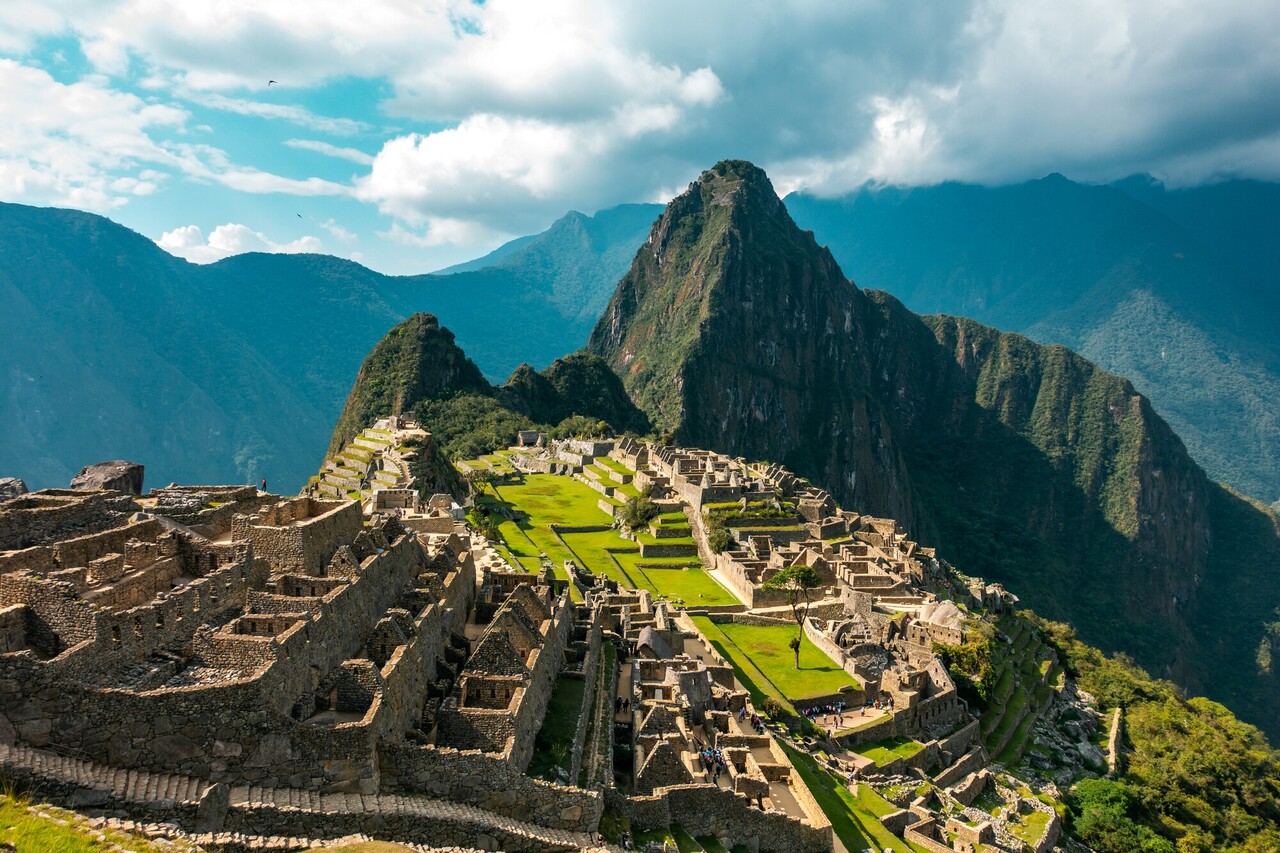
Machu Picchu can be done via trains, short treks, or doing the Inca trail. Trains are the easiest, most convenient and quite cheap (210 USD all included) whereas the short trek requires you to walk through the forest for 2 - 3 days, with activities for you to do throughout the trek (230 - 250 USD). The Inca trail is the most expensive and the most difficult to do since you have to book many weeks prior to arriving.
As for me, I went with the train to give me more flexibility over how much time I could spend on Machu Picchu and it was well worth it. I was able to wait it out for the weather to clear up and the crowds to fade and both happened that evening!
Tip: Stay until right when the gate is about to close (4 PM) to have the whole place to yourself. See the photo above for proof.
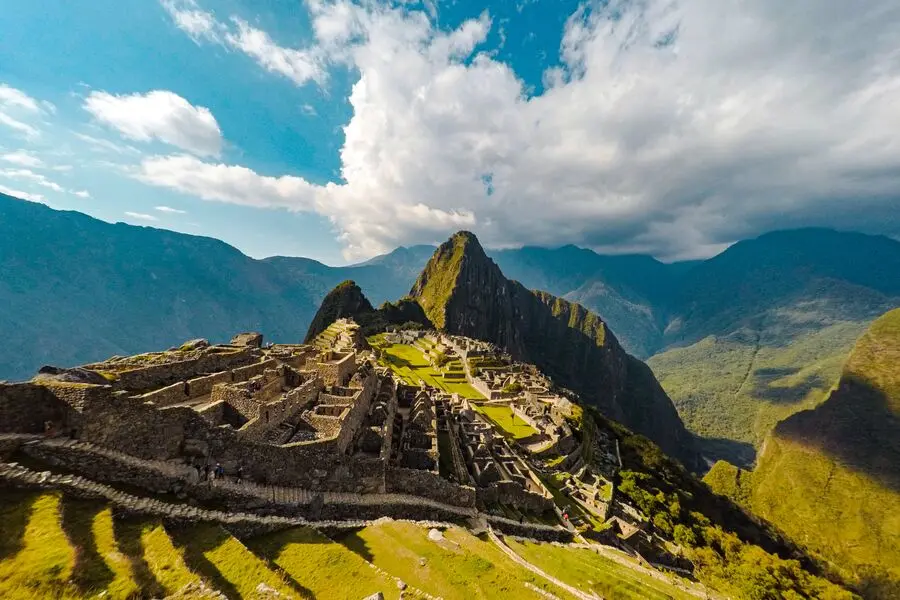 This Is How To Avoid The Crowds In Machu Picchu
On your last day, book a trip to hike the rainbow mountain. The whole trip will take you up 5000m again to the viewpoint to see the Rainbow mountain. The hike itself is quite easy and takes around 5 - 6 hours to complete but the altitude can really affect your body up there so prepare accordingly.
More Activities in Cusco
Where to Stay in Cusco
Getting From Cusco to Arequipa
From Cusco, you can get to Arequipa via an overnight bus operated by Cruz del Sur from their bus terminal. They have a bus running at 20:00 and 20:30 daily. The journey will take about 10 hours and cost around 40 SOL per person. To book a ticket online, be sure to check the price out from the link below:
Arequipa (2 - 4 nights)
Arequipa is a nice cozy place with stunning main square, laid-back vibe and great food. You can go and walk around the main square and be fascinated by the beautiful colonial architecture.
After that, drop by at the Monasterio de Santa Catalina and walk along the colorful corridors of this important religious sight.
If you still have enough energy left, go on a 2 days, 1 night hike in the Colca Valley and stay at the oasis in the canyon.
More Activities in Arequipa
Where to Stay in Arequipa
Getting From Arequipa to Puno
From Arequipa, you can take one of the 3 daily buses from Cruz del Sur Bus Terminal in Arequipa to get to Puno, a border town between Bolivia along Lake Titicaca. These buses leave from 08:30 to 22:30 which will take about 6 hours and cost around 30 SOL per person.
Puno (2 nights)
Puno sits by the Titicaca lake sharing with its neighboring country Bolivia. If you are making your way across to Bolivia, Puno is another great option for a night stop. While you are in Puno, you have to go on the lake, and there are several ways you can do that.
You can visit the Uros floating islands and learn how they built the islands, anchored them in place, and live off the land. To be honest it was one of the touristy things I'd done in Peru but it was interesting to learn about the process of how the people of Lake Titicaca lives their lives.
From Puno, you can take an early bus to La Paz or Copacabana, Bolivia by booking them through the hostel or at the main bus terminal.
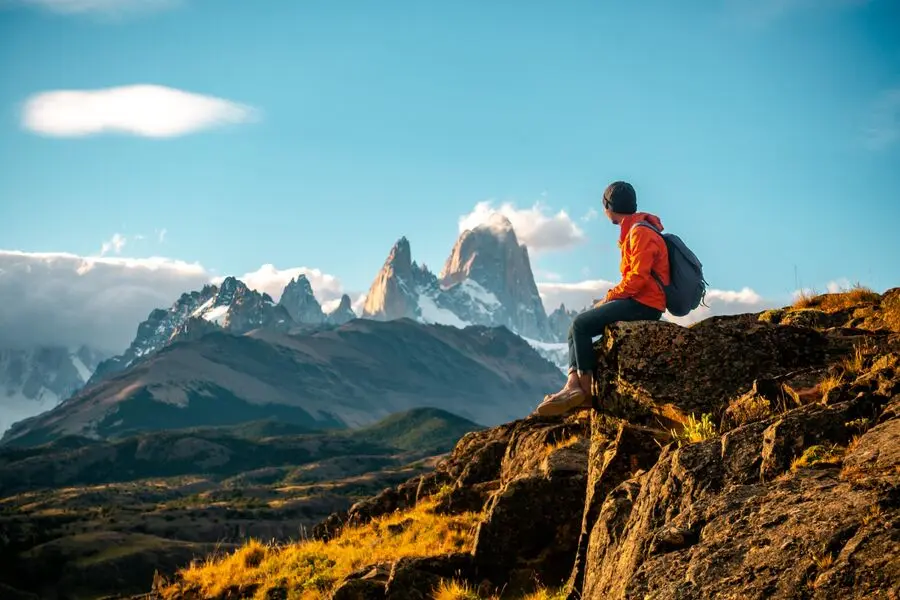 20 Best Places to Visit in South America
More Activities in Puno
Where to Stay in Puno
Why go to Peru?
Peru has it all. If you are into hiking, Huaraz has one of the best and highest alpine in the world, only second to the Himalayas. It's like a little Kathmandu up there. If you are interested in the Inca history, a visit to Machu Picchu, Cusco and a number of museums in Lima will greatly improve your knowledge about their culture and how they were able to flourish and became the biggest empire in the Pre-Colombian times. Not to mention, the best gastronomy in South America. Truth be told, food in South America is not the best but the Peruvian food is exceptional and eating your way through the country is one of the highlight things to do here.
When to Go
Due to the geography of the country, the weather can vary a lot depending on where you go. In the Andes, the best time to go there is around September - November where the weather is sunny and dry at the beginning and by November, you may risk some rains as it is a shoulder season but you will also experience the Andes without crowds which I think is a perfect balance. The weather pattern is quite similar as well in the Amazon part of the country.
For the best time to visit the coasts, December to March is hot and sunny which is perfect for swimming and surfing.
All in all, traveling to Peru at the end of the year seems to have the perfect balance of clear and rain throughout the country. At the end of the day, the weather may not be as expected. There might be rainy days in the summer and vice versa, so do not sweat too much and enjoy the trip, whatever comes your way.
How to Get Here
The best way to get here is to fly into Lima if you are coming from abroad. I would recommend you browse through Skyscanner or Expedia to find a cheap flight from where you live to Lima that best fit your itinerary. If you are already in Ecuador, you can simply cross the border from the north with an overnight bus from Loja to Trujillo and traverse from north to south as suggested in the itinerary.
How To Get Around
In the city, local mini-buses (collectivo) are quite easy to flag down and extremely cheap but you will have know where you are going and tell them where to stop (say something like "Pare Aqui" should do). Otherwise, taxis are reasonably priced and more convenient when you don't know where exactly your destination is.
In between cities, traveling via buses is the best option. Buses in Peru is one of the most comfortable ways to go around the country without breaking a bank. With full reclining seats, hot food and entertainment offers on long-haul trips, for an affordable price, buses are the way to go.
Note: Buses in Peru operates differently from other countries due to bus companies having bus terminal in a separate location so make sure you go to the right one.
Recommended bus companies: Cruz del Sur and Oltursa for long haul southern route, Linea for northern route, and any local bus companies are fine for short haul trip.
Internet
Update: If your phone supports eSIM, I highly recommend you check out Airalo, a global eSIM marketplace, and get an eSIM so that you can stay connected affordably while traveling in Peru without having to switch out your physical sim card.
Long are the days when you have to scramble your way to find a local sim card at an airport when you arrive. You can buy an eSIM prior to your arrival and you are good to go. If your phone doesn't support eSIM, below is how you can get a local sim card in Peru:
Claro is widely available and I found, more tourist-friendly than Movistar as they have 2GB of data sim card available for 30S. Refilling the sim card is as easy as going to any shop with a Claro sign and ask them to refill the money for you and you can reactivate any package you like. For more information. The data speed is 4G in most cities and I never had coverage problems except in the mountains in Huaraz but that was expected. read more here.
Tips: To stay connected with your loved ones at home, be sure to have a VPN service like NordVPN installed before traveling so that you can bypass whatever local Internet censorship you might run into while in Peru.
Daily Budget
This place is quite cheap compare to all the other countries in the world. If you are planning a trip here, you can expect to pay around 25 - 45 USD per day per person and that should include accommodation and 3 meals.
Keep in mind that this is just a suggested daily budget based on my style of traveling, which is leaning more toward the budget side of things. If you want to stick to this budget, expect to sleep in dorms, eat out only a few times, and be comfortable using the cheapest and most convenient way of transportation, which often times involves walking.
What to Pack for Peru
As you know, I am a light traveler and packing light for a trip like this is an art in and of itself. Here are a few tips on what to pack for your trip to Peru:
- Walking/Hiking Shoes: I love walking around new cities or go on a small hike and so I highly recommend you take a good pair of comfortable shoes with you on this trip. My go-to pair of shoes is the Timberland 3-Eye Classic Boat Shoes that I always wear when I am out and about, even on long hikes.
- Breathable Shirts: It can be quite hot outside when the sun is out and the sky is clear so be sure to pack multiple breathable shirts that you can wear when you are out and about. We also have some really cool t-shirts in the Apparel Shop so be sure to check it out!
- Shorts/Jeans: Since you will be walking around a lot more when you are traveling, I highly recommend you pack a few pairs of breathable shorts as well as some Levi's jeans for when it gets a little cooler outside. For women, leggings are awesome for both hot and cold climates so be sure to pack some too.
- Fleece Jacket: When it's cold outside, I always recommend putting on more layers and an insulating layer (second layer) you should always have with you is a fleece jacket. I recommend the Columbia Steens Mountain Fleece (for women).
- Outer Shell Jacket: An outer shell jacket is great for when it is rainy or a little windy outside. I highly recommend the Columbia Watertight Jacket (for women). It's breathable, light to carry, and best of all, it comes in this awesome orange color.
- Microfiber Towel: A Microfiber towel is the perfect backpacker's towel as it is light, easy to dry, and can be compressed to save space in your backpack.
- Camera: You should also pack a good camera for your trip so that you can capture all the beautiful experiences you might have while you travel. I recommend the Sony a7C camera together with the Sony 24-70mm f2.8 GM II lens which is probably the highest performance camera and lens combination you can get right now.
- Power Bank: Keep your electronic charged on-the-go with a 20,000+ mAh Power Bank.
- Water Bottle: Hydro Flask Trail Water Bottle is a great insulated water bottle to have with you in cities or on hiking trails. It is lightweight and can keep your water cold/warm for more than 12 hours. A total game-changer.
- Universal Adapter: You just need one universal adapter to plug in your electronics in any country you are visiting.
- Packing Cubes: Packing Cubes will help you save space in your backpack as well as keep all your belongings organized.
- A Daypack: Langly Alpha Globetrotter is my go-to everyday camera backpack. It's large enough to carry all my travel gear, it comes with plenty of slots and pouches, and it is stylish as hell!
- A Large Backpack: You will need a large backpack to carry all of this stuff with you. I recommend you get the Osprey Atmos AG 65L backpack. With the excellent weight distribution and the lifetime guarantee, you can never go wrong with Osprey.
For more information on what I pack in my backpack for this trip, check out: My Packing List: 60 Travel Essentials.
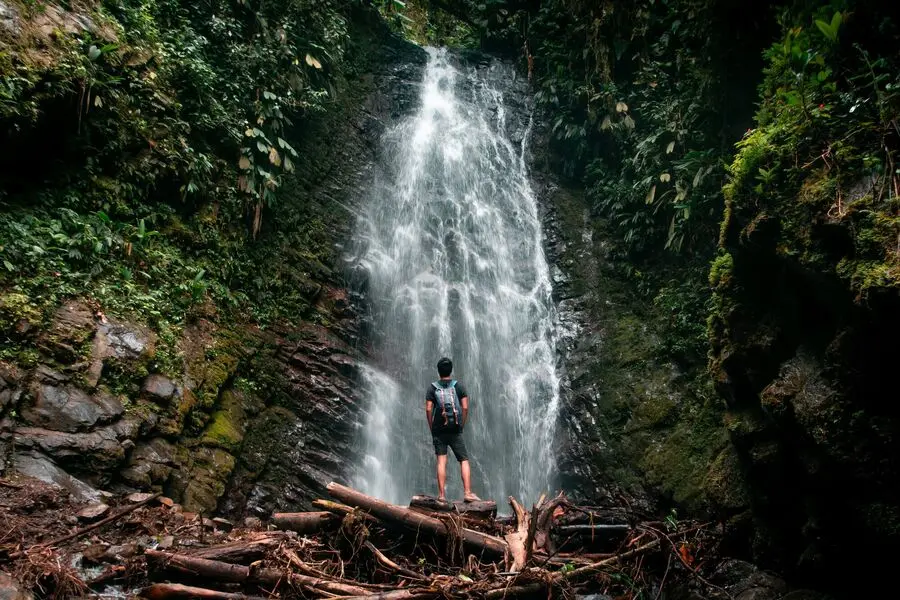 What to Pack For South America: The Essential Packing List
Don't forget to Get Travel Insurance
If you are looking for travel insurance to go along with your trip to Peru, I would recommend Heymondo.com, which is what I use to look for travel insurance that fits my kind of adventure. Special for our readers, get 5% off on your next travel insurance purchase (for new users).
Now that we have all the information we need, it's time to plan your trip to Peru! Here are some resources to help you get your trip going:
What to Pack: To help you get started on packing, here are 60 essential travel gear I carried with me on my trip to Peru.
Flights: Skyscanner and Expedia are the best places to start looking for cheap flights and great deals from your home country.
Accommodation: Hostelworld, Booking.com, and Agoda.com are the ultimate go-to platforms to search for amazing hostels and hotels at an affordable price.
Homestays: Vrbo is the best platform to look for a more local experience staying in Peru. This way, I get to meet a local first-hand and have access to local information I wouldn't have otherwise.
Travel Insurance: Heymondo will provide you a ton of insurance option to cover your trip. Get 5% off for new users.
Transportation: For bus, I always go with Busbud when traveling in Peru while for trains, Omio is my go-to place to book all my train travels in advanced.
Car Rental: DiscoverCars.com is a great and reliable platform to find rental cars in Peru.
Internet: Airalo is the best way to get a sim card and have reliable internet access for your trip to Peru. All you need is an esim compatible smartphone, install it on your phone prior to your trip, and you are all set.
Day Trips & Tours: Viator, GetYourGuide and TripAdvisor are great platforms to search for activities to do in Peru.
Tickets & Deals: Klook is always my go-to website when I want to find cheaper deals for entrance tickets to tourist attractions in Peru.
Are you planning to travel to Peru independently? Be sure to check out my guide on How To Plan A Backpacking Trip here.
Further Reading for Peru
Peru is my favorite countries in South America and there is a ton to do in the country. To better plan your trip in Peru, here is a selection of articles about Peru you might like:
- Looking for a complete backpacking guide to the entire South America continent? Here is the ultimate 6 Months Backpacking Itinerary for South America..
- First time in South America? Check out the 20 Best Places to Visit in South America.
- Packing for a trip to visit South America can be extremely daunting. Here's a packing guide to help you: What to Pack for South America
- Huaraz is one of the best places to visit in South America if you love hiking. It is like a little Nepal up there with a ton of rewarding trekking trails that ranged from one day to 15 days. Here’s a complete travel guide on adventurous things to do in Huaraz.
- One of the best treks you can do in Huaraz if you have 4 days to spare is the Santa Cruz trek. Here’s everything you need to know to trek the Santa Cruz trail independently.
- Machu Picchu is maybe one of the most crowded tourist attractions in South America but there are ways to avoid that and have the whole place to yourself without hiking. Here is how to avoid the crowds in Machu Picchu based on my personal experience.
- Looking for a place to go after Peru? How about Ecuador or Bolivia?
- Looking for more travel guides for the South America? You can find more on my South America Travel Guide page.
Disclosure: This post may contain affiliate links.
I’m Pete R., a solo traveler, a travel blogger, and a third-world passport holder from Thailand with over 8 years of travel experiences, ready to share them with you.